Showing posts with label Science & Technology - SUCH TV - SUCH TV. Show all posts

Saturday, October 13, 2018

Facebook: Hackers Accessed 29M Accounts - Fewer Than Thought

Facebook: Hackers Accessed 29M Accounts - Fewer Than Thought

This file photo shows a sign at Facebook headquarters in Menlo Park, Calif. Facebook says hackers accessed data from 29 million accounts as part of the security breach disclosed two weeks ago.
Facebook says hackers accessed data from 29 million accounts as part of the security breach disclosed two weeks ago, fewer than the 50 million it initially believed were affected.

The hackers accessed name, email addresses or phone numbers from these accounts, according to Facebook. For 14 million of them, hackers got even more data, such as hometown, birthdate, the last 10 places they checked into or the 15 most recent searches.

An additional 1 million accounts were affected, but hackers didn't get any information from them.

Facebook isn't giving a breakdown of where these users are, but says the breach was "fairly broad." It plans to send messages to people whose accounts were hacked.

Facebook said third-party apps and Facebook apps like WhatsApp and Instagram were unaffected by the breach.

Facebook said the FBI is investigating, but asked the company not to discuss who may be behind the attack. The company said it hasn't ruled out the possibility of smaller-scale attacks that used the same vulnerability.

Facebook has said the attackers gained the ability to "seize control" of those user accounts by stealing digital keys the company uses to keep users logged in. They could do so by exploiting three distinct bugs in Facebook's code. The company said it has fixed the bugs and logged out affected users to reset those digital keys.

At the time, CEO Mark Zuckerberg - whose own account was compromised - said attackers would have had the ability to view private messages or post on someone's account, but there's no sign that they did.


from Science & Technology - SUCH TV - SUCH TV https://ift.tt/2RHn4Ue
Unregistered mobile phones to become unusable after October 20: PTA

Unregistered mobile phones to become unusable after October 20: PTA

Unregistered mobile phones to become unusable after October 20
The Pakistan Telecommunication Authority (PTA) announced on Friday that the long-anticipated Dev­ice Identification, Registra­tion and Blocking System (DIRBS) would become functional on October 20 after which all unregistered mobile phones would become unusable.

The DIRBS is an indigenous solution aimed to combat the use of smuggled or counterfeit sets which either serve to reduce tax revenues for the state or pose health problems to unsuspecting consumers.

“We recommend that consumers buy only PTA-approved phone sets after Oct 20. A consumer should text the International Mobile Equipment Identity (IMEI) number printed on the box of a new handset to 8484. But he or she should pay for the handset only after (s)he receives reply that the set is compliant with the regulatory standards,” said PTA’s director general for services, Talib Dogar.

Device identification system aims to tackle use of fake or smuggled sets which pose health hazards

The technology will help the authorities counter the issue of counterfeit devices that adversely affects the government, mobile phone operators, distributors and consumers, according to Mr Dogar.

These are the devices that are not registered with the Global System for Mobile Association (GSMA) and may be mass-produced by manufactures who do not comply with international standards of production, resulting in the proliferation of counterfeit, possibly hazardous, mobile phones.

PTA also said it had legalised the nearly 160 million compliant and non-complaint mobile devices, active on all the networks, before the launch of DIRBS. All these devices would not face any service interruption as they would not be blocked by DIRBS.

“However a consumer, who inserts a SIM card other than the one (s)he was using before Oct 20 in a non-compliant mobile device after the amnesty period, will be required to register the phone’s IMEI with PTA within two weeks to be able to continue using the handset,” Mr Dogar said.

Similarly, the consumers who purchase handsets abroad would have to register them in Pakistan by logging onto the PTA’s DIRBS website. After the one-time registration, the consumer would be able to operate the handset after furnishing information about identity card number, the IMEI of the handset and the country’s name where the set was bought, etc.

“In exceptional cases, such users on roaming services, they will continue to use their phones without interruption. However, as soon as they insert a local SIM they will have to register their mobile devices with PTA,” Mr Dogar said.

Another senior officer, Nouman Khalid, explained that in order to create public awareness PTA was sending SMSs to all subscribers about the status of their mobile devices.

The four types of responses that can be received by a subscriber inquiring about the status of the IMEI include “compliant devices”, which are the PTA-approved devices legally imported into Pakistan.

The other response is “valid devices”, which are the ones having valid IMEIs but which are not PTA-approved. To facilitate such users, PTA will auto-register the IMEIs active on mobile networks before Oct 20, and their status will be compliant after the said date.

Mr Khalid said that “non-compliant” devices are those where the IMEI is either not allocated by GSMA or is duplicated. To facilitate such users, PTA will auto-pair all such IMEIs active on mobile networks with specific SIMs before Oct 20. After that date, such users will be able to use their devices with paired SIMs only.

Finally, the “blocked devices” message indicates that the IMEI is blocked as this IMEI has been reported stolen earlier.

Mr Khalid said that after coming into effect the system could help the government increase revenues from $170 million to $200m on imported phone sets.


from Science & Technology - SUCH TV - SUCH TV https://ift.tt/2IRYZWV
A wagging finger sticking out of your mobile phone is creepy

A wagging finger sticking out of your mobile phone is creepy

A wagging finger sticking out of your mobile phone is creepy
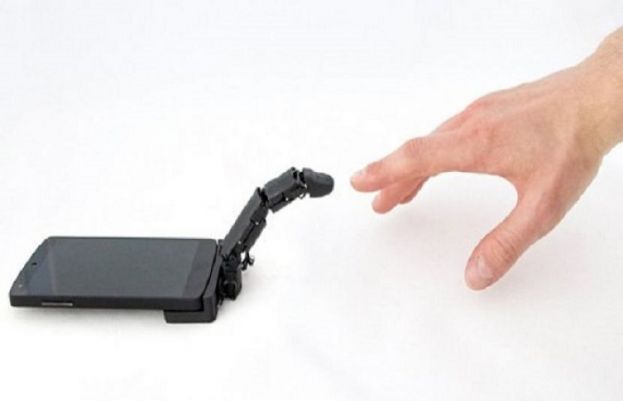
A French researcher has invented a robot finger that attaches to your mobile phone. It can wriggle across your desk. It can stroke your hand. And guess what? It’s creepy. No, really, watch the video. Creepy, see?

“My PhD subject is around touch in communications,” explains Marc Teyssier, a researcher at Telecom Paristech engineering school. “When we talk with people in real life we touch each other to communicate emotions, for example a stroke on the arm, or stuff like that. But for mobile devices and interaction in general in computers, we don’t use touch at all. So my starting point was: how can we bring touch in human-computer interfaces?”

So he designed, built and patented the MobiLimb robotic finger, which plugs into a mobile phone and looks very much like a real finger. It can drag the phone across the table. Your friends can activate it and operate it remotely, to give you a comforting pat on the wrist when they talk to you.

But when people saw it, everyone had the same reaction.

“We have a tonne of reaction on the internet, like: ‘It’s creepy’. Everybody tells me it’s creepy. And it is, actually, in fact,” Teyssier said. “We communicate with humans with touch. We use fingers. We use motion. But when we put that on a mobile device, everybody thinks it’s crazy and creepy.”

The creepy phone finger tells us something about who we are, and what we expect from a world where your phone listens and responds to your commands like a person, but still doesn’t have a moving body, Teyssier said. For now, he thinks, the robot finger is both too human, and not quite human enough.

“I think to some extent we are right in the uncanny valley. Technology looks like human, but its not exactly human, so our brain - we don’t know how to react.”

But Teyssier imagines a world one day where you would interact with objects the way you do with other people or pets. Someday, you might walk into your kitchen and get a hug from your fridge.

“With this project, we question a lot: the smartphone and the human being and human nature,” he said. “What if all devices had arms and limbs and were able to touch us like a human? I think we would behave totally differently with technology.

“Maybe we wouldn’t throw it in the trash after two years, right? Maybe we would want to build a relationship with it and keep it with us as a friend or a companion.”


from Science & Technology - SUCH TV - SUCH TV https://ift.tt/2Cac3FD

Friday, October 12, 2018

Snapchat announces new scripted shows to win over users

Snapchat announces new scripted shows to win over users

Snapchat announces new scripted shows to win over users
Snapchat on Wednesday announced new scripted shows for its photo messaging app Snapchat which will launch this fall and struck partnerships with Hollywood production companies and writers in hopes of reversing its decline in users.

Shares of Snap have fallen 52 per cent since the beginning of the year as Snapchat has struggled to attract new users as rivals Facebook and Instagram introduced Snapchat-like features on its own apps.

The serialized shows will have new episodes daily, and include a documentary series called “Growing Up is a Drag,” about the coming-of-age of teenage drag stars, produced by Bunim/Murray, the production company behind the hit reality television show Keeping Up with the Kardashians.

Snap said the episodes will be fast-paced for mobile viewing and as short as five minutes long, with each show having a profile page where viewers can easily find each episode.

That could address criticism from users and advertisers that Snapchat’s recent app redesigns have made it confusing to use.

The episodes, like Snapchat’s existing shows, will include six-seconds of advertising that are unskippable.

Last week, a leaked memo from Snap Chief Executive Evan Spiegel laid out goals to reach full-year profitability in 2019 by attracting more older users and redesigning its Android app to better serve emerging markets.

Michael Nathanson, an analyst with MoffettNathanson, said in a note on Tuesday that Snap was falling “woefully short” of its goal to be profitable, estimating the company will lose more than $1.5 billion next year.

Snap shares declined almost 3.0 per cent on Tuesday after Nathanson’s note.

The company has also seen high turnover among its executives, and said in September its Chief Strategy Officer Imran Khan would step down.


from Science & Technology - SUCH TV - SUCH TV https://ift.tt/2yyLNBm

Thursday, October 11, 2018

Court orders partial ban for diesel cars in Berlin

Court orders partial ban for diesel cars in Berlin

Court orders partial ban for diesel cars in Berlin
The ruling will affect several traffic hubs in the city's downtown area. The suit was brought by environmentalists in the wake of a series of scandals over diesel emissions.

A court in Berlin has sided with environmentalists and ordered a ban on diesel vehicles for several areas in the city's center. It has also ordered the city government to carry out a survey to determine which areas the ban could be expanded to.

This could affect 200,000 vehicles, including commuters' cars and delivery vans. The court gave the Berlin Senate until 2020 to implement the ban, but city officials have already said that such a timeline was impossible.

The suit was brought by the nonprofit Environmental Action Germany (DUH), who had previously sued the Federal Motor Transport Authority (KBA) over the Volkswagen diesel emissions scandal.

DUH was seeking a large prohibition zone for downtown Berlin, where the recommended limits for toxic nitrous oxide have long been exceeded. Such bans have been deemed admissible by the Federal Administrative Court, and are already in place in cities like Hamburg. Frankfurt is also set to introduce a partial diesel driving ban in the city center in 2019.

Berlin's Social Democrat (SPD) and Green party coalition government has planned several projects aimed at reducing emissions, such as having all public buses fully electric by 2030. Until then, buses will be given new high-tech exhaust filters, and the city also plans to greatly expand its cycling infrastructure.

Also on Tuesday, environment ministers from across the European Union were meeting in Luxembourg to look for a common line on new climate protection requirements for cars.


from Science & Technology - SUCH TV - SUCH TV https://ift.tt/2E8TFzH
Microsoft expands cloud service in push for $10 bn Pentagon contract

Microsoft expands cloud service in push for $10 bn Pentagon contract

Microsoft
Microsoft Corp (MSFT.O) said on Tuesday its expanded Azure cloud service to help government clients save data on their own servers would be available by the end of the first quarter of 2019, as it battles with Amazon.com for a $10 billion Pentagon contract.

The two companies are left in the fray for the lucrative contract after Alphabet Inc’s (GOOGL.O) Google dropped out on Monday, saying the company’s new ethical guidelines do not align with the project.

Pentagon’s JEDI, or Joint Enterprise Defense Infrastructure, cloud computing solution contract is part of the Department of Defense’s efforts to modernize its IT infrastructure.

The expanded Azure Government Secret cloud service will make Microsoft “a strong option for the JEDI contract,” said Julia White, corporate vice president of Microsoft Azure, adding that the company is capable of meeting the highest classification requirement for handling “top secret U.S. classified data”.


from Science & Technology - SUCH TV - SUCH TV https://ift.tt/2PqxaYe

Wednesday, October 10, 2018

Google just shut down Google+ for good — here are 17 other Google products that bombed, died, or disappeared

Google just shut down Google+ for good — here are 17 other Google products that bombed, died, or disappeared

Google just shut down Google+ for good — here are 17 other Google products that bombed, died, or disappeared
Google is known for its collection of wildly popular products, from Search to Maps to Android. But not everything the company touches turns to gold.

Google Glass was supposed to change the world, but it quickly became a punch line. And remember Google Buzz?

Now, Google is killing off one more product: Google+, the social network that was supposed to take on Facebook and LinkedIn. Google decided to shutter the service after a software glitch caused Google to expose the personal profile data of hundreds of thousands of Google+ users (though the company says nothing bad happened).

Of course, the best innovations are the ones that everybody thinks are doomed to fail, so it makes sense that Google has had its fair share of misses over the years. Still, we counted at least 18 products that have ended up in the Google graveyard (but there are probably more — let us know if we're missing anything).


from Science & Technology - SUCH TV - SUCH TV https://ift.tt/2pKRS9Q
Facebook launches AI video-calling device 'Portal'

Facebook launches AI video-calling device 'Portal'

Facebook launches AI video-calling device 'Portal'
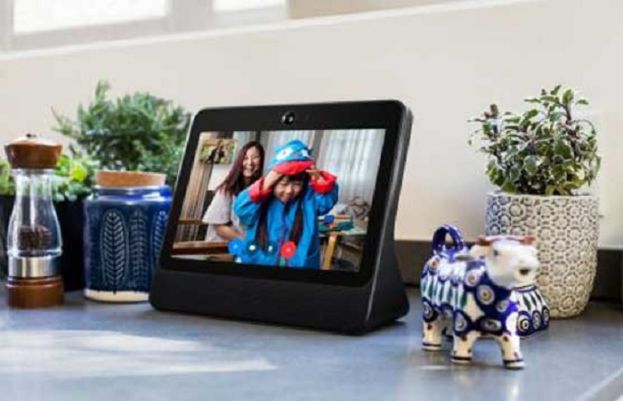
Facebook on Monday launched a range of AI-powered video-calling devices, a strategic revolution for the social network giant in its bid for a slice of a market currently dominated by Amazon and Google.

"It’s been a big shift for the company," Facebook’s vice president of consumer hardware Andrew Bosworth told AFP before the launch of "Portal".

"We’ve seen a rise of video calling, on both Messenger and WhatsApp -- it has been a tremendous trend," he said.

The device, which will be available for pre-order in the United States from Monday, is designed to allow users to make video calls at home without having to stand immediately in front of the screen or hold a phone at arm’s length.

But the launch of a product putting a camera into homes is likely to raise privacy issues for the social media giant, which has suffered several data breaches this year involving tens of millions of user accounts.

Although Facebook acquired virtual reality headset manufacturer Oculus in 2014, this is the first time it has developed a consumer hardware product in-house.

‘Hey Portal’

Offering hands-free voice control, Portal comes in two sizes, a 10-inch screen which retails at $199 (173 euros) and a 15-inch version will go for $349. And to start the call, all it takes is: "Hey Portal."

During calls, it can also play music on Spotify as well as tell children stories via augmented effects app Story Time.

And it also comes bundled with Amazon’s voice interface "Alexa", enabling users to shop or control household appliances.

During a conversation, the integrated camera can automatically zoom out to include a second person, or be instructed to follow a certain individual as they walk around.

Facebook has moved to quickly allay security fears, saying that by keeping the processes on the actual device rather than in the cloud, the risk of hacking is lower than with a smartphone or computer.

Calls will be encrypted, and the AI technology runs locally on Portal, not on Facebook servers. It only sends voice commands to the servers after hearing, "Hey Portal".

The camera can be blocked by a cover and the device has a button for disabling both the lens and the microphone.

A guarantor of privacy?

Security is a sensitive issue for Facebook which had 50 million of its user accounts breached by hackers last month.

Earlier in the year, it was forced to admit the personal data of tens of millions of users had been hijacked by Cambridge Analytica (CA), a British firm working for Donald Trump in 2016.

CA is accused of collecting and exploiting users’ personal data for political purposes without their consent.

Facebook has since reasserted itself as a guarantor of privacy.

"Frankly if we don’t build the hardware, I do have concerns," Bosworth said. "You need to have abuse prevention very early on, you need to have security built in early on."

A cautious welcome

The company worked with a US film director in order to make the camera movements feel natural, said Nick Fell, marketing director for the Portal team.

"We set out to try and make video calling so good that it feels like you’re sharing the same physical space as someone else," he said.

Facebook representatives prefer to talk about their "mission" rather than business models and profits, but wireless speakers and video calls are a growing market.

There were 17 billion video calls on Messenger in 2017, double the number in 2016, according to official data.

Analysts reacted cautiously to the announcement, saying Facebook was late to the smart speaker market. But the technology may be a good move for future investments.

"From a market perspective there’s a good argument that for consumers, smart speakers and digital assistants are a crucial part of the future," said Tom Morrod, a research director for consumer electronics and telecoms at IHS Markit.

"They’re the AI centrepoint of digital life or digital home. That’s why it’s a strategically important thing for Facebook to be doing."


from Science & Technology - SUCH TV - SUCH TV https://ift.tt/2pGM5SC

Monday, October 8, 2018

Increasingly human-like robots spark fascination and fear

Increasingly human-like robots spark fascination and fear

Increasingly human-like robots spark fascination and fear
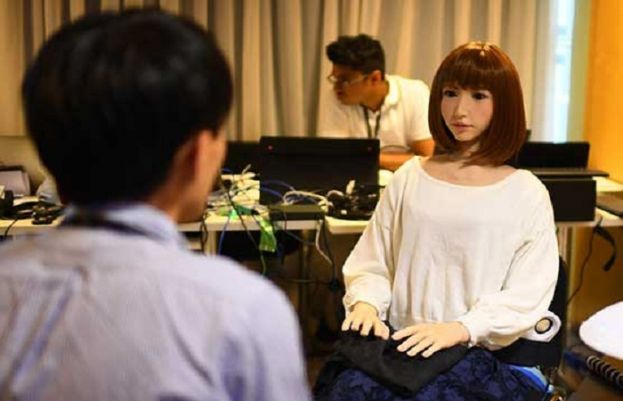
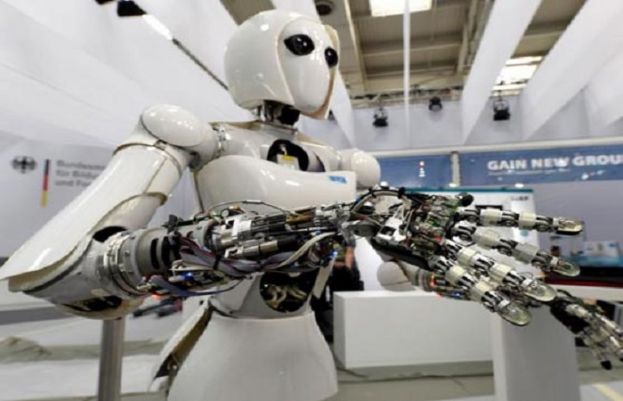
Sporting a trendy brown bob, a humanoid robot named Erica chats to a man in front of stunned audience members in Madrid.

She and others like her are a prime focus of robotic research, as their uncanny human form could be key to integrating such machines into our lives, said researchers gathered this week at the annual International Conference on Intelligent Robots.

"You mentioned project management. Can you please tell me more?" Erica, who is playing the role of an employer, asks the man.

She may not understand the conversation, but she’s been trained to detect key words and respond to them.

A source of controversy due in part to fears for human employment, the presence of robots in our daily lives is nevertheless inevitable, engineers at the conference said.

The trick to making them more palatable, they added, is to make them look and act more human so that we accept them into our lives more easily.

In ageing societies, "robots will coexist with humans sooner or later", said Hiroko Kamide, a Japanese psychologist who specialises in relations between humans and robots.

Welcoming robots into households or workplaces involves developing "multipurpose machines that are capable of interacting" with humans without being dangerous, said Philippe Soueres, head of the robotics department at a laboratory belonging to France’s CNRS scientific institute.

Human, but not too human

As such, robots must move around "in a supple way" despite their rigid mechanics and stop what they are doing in case of any unforeseen event, he added.

That’s why people are choosing "modular systems shaped like human bodies" which are meant to easily fit into real-world environments built for humans.

For instance Atlas, a humanoid robot made by Boston Dynamics, can run on different types of surfaces.

In Madrid, Marc Raibert, founder of the US firm, played a video showing Atlas doing a backflip.

In a sign of fears over the potential future uses for these humanoids, Amnesty International has accused Atlas, financed by an agency of the US Department of Defense, of being a "killer robot" made for future warfare.

Another example of humanoids presented in Madrid is Talos, a robot made by Spanish company Pal Robotics shown testing his stability on a balance board.

While it may not be the only form used for those coming into contact with humans, "it’s easier for people to accept the robots when they have human-like faces because people can expect how the robots will move, will react," said Kamide.

That’s comforting, but it also has its limits.

Japanese researcher Masahiro Mori’s "uncanny valley" theory, which he developed in the 1970s, states that we react positively to robots if they have physical features familiar to us but they disturb us if they start looking too much like us.

"You can’t ever make a perfect human face" and this imperfection provokes a feeling of "rejection" among humans, said Miguel Salichs, a professor at the robotics lab of Madrid’s Carlos III University.

As such, he chose to fashion his robot Mini Maggie into a small cartoon animal.

‘Understand humans’

In Japan, robots like Erica are already used as receptionists.

But for one of their makers, Hiroshi Ishiguro, a professor at Osaka University, humanoids are above all "a very important tool to understand humans".

Researchers have to think hard about the human form and how humans interact to develop robots that look like them.

"We understand the humans by using robots, the importance for example of eye gazing," said Ishiguro, who has also made robots that look like dead celebrities, or "moving statues".

He believes that humanoids are best to improve interactions between robots and humans.

"The human brain that we have has many functions to recognise humans. The natural interface for the humans is the humans," said Ishiguro.

For Jurgen Schmidhuber, president of artificial intelligence start-up NNAISENSE, robots -- be they humanoid or not -- will be part of our future.

They won’t just imitate humans but will solve problems by experimenting themselves thanks to artificial intelligence without "a human teacher," he believes.

Sitting on her chair, Erica nods her head.


from Science & Technology - SUCH TV - SUCH TV https://ift.tt/2pDorXg

Saturday, October 6, 2018

First SpaceX mission with astronauts set for June 2019: NASA

First SpaceX mission with astronauts set for June 2019: NASA

First SpaceX mission with astronauts set for June 2019
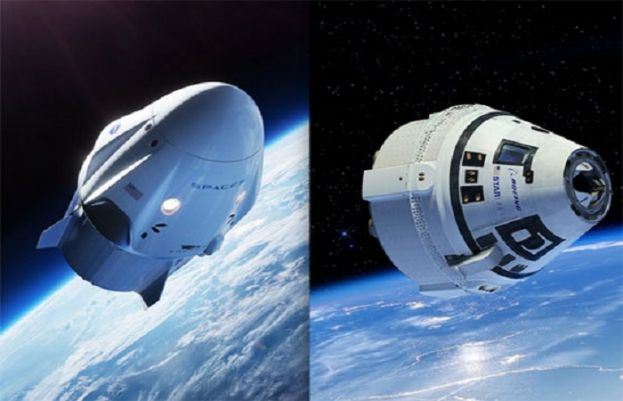
NASA has announced the first crewed flight by a SpaceX rocket to the International Space Station (ISS) is expected to take place in June 2019.

It will be the first manned US launch to the orbiting research laboratory since the space shuttle program was retired in 2011, forcing US astronauts to hitch costly rides aboard Russian Soyuz spacecraft.

A flight on Boeing spacecraft is set to follow in August 2019.

The timetable for both launches has already been postponed several times, but NASA said Thursday it would now be providing monthly updates on deadlines.

"This new process for reporting our schedule is better; nevertheless, launch dates will still have some uncertainty, and we anticipate they may change as we get closer to launch," said Phil McAlister, director of Commercial Spaceflight Development at NASA Headquarters.

"These are new spacecraft, and the engineering teams have a lot of work to do before the systems will be ready to fly."

Both missions are considered tests: the two astronauts transported in each flight will spend two weeks aboard the orbiting ISS before returning to Earth.

In the long term, NASA will use SpaceX and Boeing to take astronauts to the ISS for regular missions, which last about six months.

SpaceX will carry out an uncrewed test in January 2019, and Boeing in March 2019.

SpaceX will use its Falcon 9 rocket for its launch with a Crew Dragon capsule attached on top.

Boeing s Starliner ship will be propelled into space by an Atlas V rocket made by the United Launch Alliance, a joint venture with Lockheed Martin.

NASA is depending on the success of both missions as its contract with the Russian space agency expires in November 2019.


from Science & Technology - SUCH TV - SUCH TV https://ift.tt/2OHGo57

Thursday, October 4, 2018

Honda joins forces with GM's Cruise to develop autonomous vehicles

Honda joins forces with GM's Cruise to develop autonomous vehicles

Honda joins forces with GM's Cruise to develop autonomous vehicles
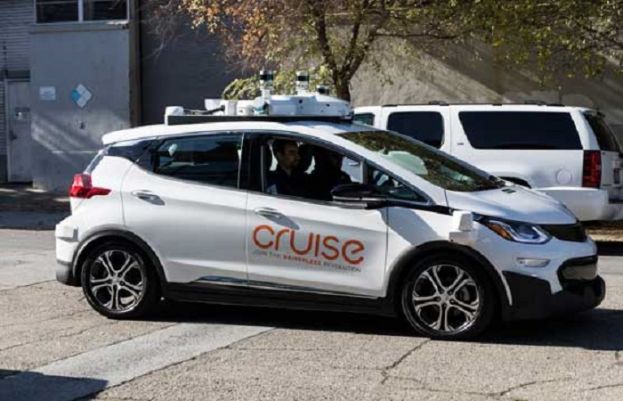
Japanese carmaker Honda has joined forces with the General Motors tech startup Cruise to develop autonomous vehicles as the race to market self-driving cars heats up, the companies announced Wednesday.

Honda’s investment promises broader market access for the new cars once they are ready for the public. The Japanese government hopes to showcase self-driving cars when Tokyo hosts the Summer Olympics in 2020.

With a $2.75 billion commitment in equity and shared development costs over 12 years, Honda joins Japanese conglomerate Softbank in backing the GM venture to create a multi-purpose vehicle that can be manufactured in high volume for use worldwide, the US auto giant said.

Major automakers, start-ups and tech firms are racing to develop truly autonomous vehicles, which the industries see as the next frontier in personal mobility.

Honda’s announcement comes on the heels of Toyota’s move in August to invest $500 million in the ride-hailing service Uber to collaborate on a similar venture to mass-produce self-driving vehicles.

"As is becoming increasingly apparent, this is an effort that requires very, very significant resources to pull off and we’re thrilled to have Honda join forces with us," GM President Dan Ammann said during an investor call.

Ammann said developers were working "as quickly as we can" to deploy the new technology but did not say when this could occur.

"What we’re giving you here is just an early glimpse of what we think the future looks like," he said.

The vehicle to be developed with Honda will have no steering wheel or other manual controls when deployed, according to GM.

The race for driverless

With Softbank’s $2.25 billion investment announced in May, Cruise is now valued at more than $14 billion, according to GM.

The company, in which GM now holds an 85 percent stake, says it is currently testing driverless cars on open roads in Arizona, California and Michigan, "navigating some of the most challenging and unpredictable driving environments."

The company maintains a research-and-development facility in San Francisco.

Sandy Schwartz, president of Cox Automotive, said the battle to be the first with a driverless product was likely to produce more unexpected partnerships in the coming months.

"I’m a little surprised at seeing bitter rivals joining forces but this is coming. Everybody knows it," he told AFP.

Combining the strengths of different manufacturers raises the chances of early success, he said.

"You want your partner to be the best partner during that race."

While fully autonomous vehicles remain a theoretical goal at this point, developing technologies promise swift changes to the market for consumer and commercial vehicles.

The efforts have suffered setbacks especially after some crashes during testing, including a fatality.

Uber briefly suspended tests of self-driving cars in March following a fatal accident in Arizona. It resumed testing in Pennsylvania in July, but with a driver behind the wheel at all times, the company said.

One of self-driving tech firm Waymo’s minivans crashed into a highway median in June, reportedly after its human driver manning the wheel fell asleep.

GM says it is working to eliminate crashes, emissions and congestion entirely.

Ford Motor Company on Tuesday unveiled a proposed standard it said all manufacturers should adopt for autonomous vehicles to signal their intentions - like yielding or preparing to stop - to other users of the road.

Uber last month also announced it would spend $154 million over five years to expand an existing Toronto laboratory that is developing artificial intelligence for use in self-driving cars.


from Science & Technology - SUCH TV - SUCH TV https://ift.tt/2zQ6dI2
Eyeing a third woman at the 2018 Nobel Prize in Physics

Eyeing a third woman at the 2018 Nobel Prize in Physics

The 2018 Nobel Prize in Physics recognized revolutions in laser physics. And the lack of a revolution in equality and diversity.
The 2018 Nobel Prize in Physics recognized revolutions in laser physics. And the lack of a revolution in equality and diversity. Wow. What a day to be awarded the 2018 Nobel Prize in Physics after what just happened at CERN. You would have to be a steely old so-and-so — and totally not cynical — to think that the suspension of "a scientist" for alleged sexist — nigh on woman-hating — remarks would have had no impact on the Nobel committee's decision.

The 2018 Nobel Prize in Physics recognized "groundbreaking inventions in the field of laser physics." And CERN is the world's biggest particle physics laboratory — its business is lasers, basically. And it's a quasi-Laureate, having played a part in the detection of the once-elusive Higgs boson fundamental particle for which François Englert and Peter Higgs got the 2013 prize. So CERN is part of this male-dominated Nobel culture we slavishly celebrate once a year.

Personally, I fear the Nobel committee is so far removed from reality that it has yet to make the connection. And yet it's in all of our heads: the number of women in the sciences, the number of women who get recognized for their science and the everyday sexism that is just… everywhere.

Notably, though, this year's physics winners include Dr. Donna Strickland, who now holds the ominous accolade of "The third woman to have ever been awarded the Nobel Prize in Physics." That will surely follow her around like a bad smell. At the very least, it will distract from the science for which she, her one-time mentor Gérard Mourou, and Arthur Ashkin, are getting the prize.

I mean, look, we're at it already. And I'm not done yet.

That scientist, the one who was suspended from CERN on Monday, is reported to have said (there's no recording) that physics was "invented and built by men."

Well, that's bunkum.

Marie Curie — a woman, no less — was the first woman to win a Nobel Prize and only the fourth person to win the prize in physics in 1903 (although she had to share it with her husband, Pierre, and Antoine Henri Becquerel — but let's for once keep the men's names in parenthesis). Curie also attended the historic 1927 Solvay Conference on Electrons and Photons in Brussels. There she was in her rightful place next to Max Planck, Albert Einstein and Niels Bohr. Like those men did it all on their own.

But back to the Nobel Prize.

The 1903 prize recognized Curie (and the "other two") for their research on "radiation phenomena." Ironically, I believe, that research will have led in some part to the discoveries made by Strickland, Mourou and Ashkin.

Squashed light

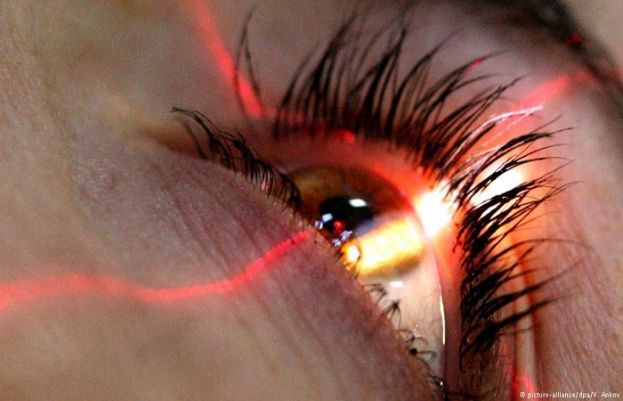
So let's get to those discoveries. In reverse alphabetical order, we'll start with Strickland and Mourou, who are recognized for having "paved the way towards the shortest and most intense laser pulses created by mankind."

It was back in the 1980s, when Mourou was Strickland's PhD supervisor. Together they managed to create ultrashort high-intensity laser pulses, and, as a result, invented a technique now known as "chirped pulse amplification," or CPA.

The concept is relatively simple, but it still might help if you think of it like kneading and baking bread.

You take a short laser pulse (a bit of dough), stretch it in time (knead it), amplify it (let it rise), and then squeeze it back together again (knock it back down).

Okay … so the analogy only works if, like me, you bake a lot of bread. But that's essentially the process behind CPA. When you stretch a light pulse in time, its power drops, and that means it can be amplified — made louder — without causing damage to the amplifier (the yeast?). And then, when it's compressed, or squeezed, the light pulse gets stronger and more intense. That's the flavor of it, anyway.


from Science & Technology - SUCH TV - SUCH TV https://ift.tt/2y9ISyU

Wednesday, October 3, 2018

EU warns Facebook not to lose control of data security

EU warns Facebook not to lose control of data security

EU warns Facebook not to lose control of data security
The EU’s top data privacy enforcer expressed worry Tuesday that Facebook had lost control of data security after a vast privacy breach that she said affected five million Europeans.

"It is a question for the management, if they have things under control," EU Justice and Consumer Affairs Commissioner Vera Jourova told AFP in Luxembourg.

"The magnitude of the company ... makes it very difficult to manage, but they have to do that because they are harvesting the data and they are making incredible money on using our privacy as the commodity," she added.

Jourova spoke just days after Facebook admitted that up to 50 million user accounts around the world had been breached by hackers, in yet another scandal for the beleaguered social platform.

"I will know more ... in hours or days but according to our knowledge, five million Europeans have been affected out of those 50, which is an incredible number," she said.

Jourova said Facebook’s quick revelation of the case demonstrated that new European rules on data protection implemented earlier this year are working.

New EU rules - the General Data Protection Regulation (GDPR) - have been billed as the biggest shake-up of privacy regulations since the birth of the web and will give European regulators vast new enforcement powers.

The case for GDPR was boosted by another recent scandal over the harvesting of Facebook users’ data by Cambridge Analytica, a US-British political research firm, for the 2016 US presidential election.

Jourova said the worst cases involve a company finding a major breach then failing to warn authorities or their users, which she said doesn’t appear to be the case in the latest Facebook drama.

Under GDPR, companies can be fined up to four percent of annual global turnover if they fail to abide by the rules, including notification of the data breach within 72 hours.

Facebook met this requirement, Jourova pointed out, which "is one of the factors which might result in lower sanctions, but this is only theoretical".


from Science & Technology - SUCH TV - SUCH TV https://ift.tt/2QmER1u

Tuesday, October 2, 2018

First Waterproof Drone to Fly in Air, Submerge in Water

First Waterproof Drone to Fly in Air, Submerge in Water

First Waterproof Drone to Fly in Air, Submerge in Water
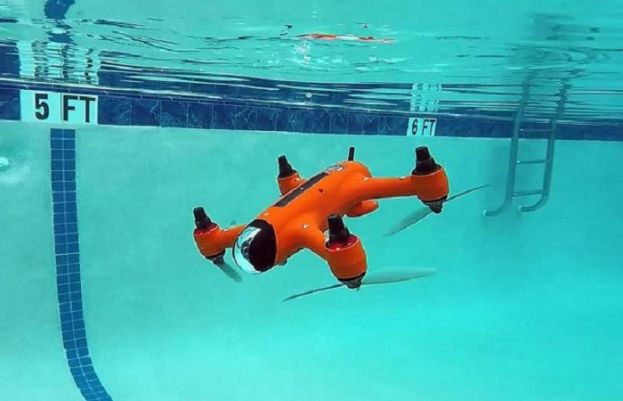
The new innovation is emerging in drone technology and now a company has made a complete water-proof drone that can swim on water, like a submarine while its controller, Interestingly, is also full water proof.

Spry drone is the world s first water-proof drone, manufactured by American engineers which can fly at a speed of 60 Km/h. The Swail Pro Company, located in Florida, has made it.

Spry drone has 4-K cameras , sakat (stall) photography and many other amenities. Although it can fly once for 17 minutes when charged but amazingly it reaches up to a kilometer. It also has GPS systems, apart from mobile apps.

Its video can be seen on several platforms simultaneously. According to American experts, its manufacturing and design have been completed in a time lapse of two years.


from Science & Technology - SUCH TV - SUCH TV https://ift.tt/2NX5Lk5

Saturday, September 29, 2018

Facebook says big breach exposed 50 million accounts to full takeover

Facebook says big breach exposed 50 million accounts to full takeover

Facebook
Facebook Inc said Friday hackers stole digital login codes allowing them to take over nearly 50 million user accounts in its worst security breach ever given the unprecedented level of potential access, adding to what has been a difficult year for the company’s reputation.

Facebook, which has more than 2.2 billion monthly users, said it has yet to determine whether the attacker misused any accounts or stole private information. It also has not identified the attacker’s location or whether specific victims were targeted. Its initial review suggests the attack was broad in nature.

Chief Executive Mark Zuckerberg described the incident as “really serious” in a conference call with reporters. His account was affected along with that of Chief Operating Officer Sheryl Sandberg, a spokeswoman said.

Shares in Facebook fell 2.6 percent on Friday, weighing on major Wall Street stock indexes.

Facebook made headlines earlier this year after profile details from 87 million users were improperly accessed by political data firm Cambridge Analytica. The disclosure has prompted government inquiries into the company’s privacy practices across the world and fueled a “#deleteFacebook” social movement among consumers.

US lawmakers said on Friday that the hack may boost calls for data privacy legislation.

“This is another sobering indicator that Congress needs to step up and take action to protect the privacy and security of social media users,” Democratic US Senator Mark Warner said in a statement.

Federal Trade Commission Commissioner Rohit Chopra on Twitter said “I want answers” with a link to a Reuters story on the breach.

‘Complex’ flaw

Facebook’s latest vulnerability had existed since July 2017, but the company first identified it on Tuesday after spotting a “fairly large” increase in the use of its “view as” privacy feature on September 16, executives said.

“View as” allows users to verify their privacy settings by seeing what their own profile looks like to someone else. The flaw inadvertently gave the devices of “view as” users the wrong digital code, which, like a browser cookie, keeps users signed in to a service across multiple visits.

That code could allow the person using “view as” to post and browse from someone else’s Facebook account, potentially exposing private messages, photos and posts. The attacker also could have gained full access to victims’ accounts on any third-party app or website where they had logged in with Facebook credentials.

“The implications of this are huge,” Justin Fier, director of cyber intelligence at security company Darktrace, told Reuters.

Guy Rosen, the Facebook vice president overseeing security, said the flaw was “complex” in that it resulted from three failings.

A video upload feature should not have displayed on a user’s profile page when accessed through “view as,” Rosen told reporters on a conference call. That alone would not have been problematic except that the video feature wrongly triggered the placement of the powerful login code. And it placed the code not for the “view as” user, but for who they were pretending to be.

Facebook fixed the issue on Thursday. It also notified the US Federal Bureau of Investigation (FBI), Department of Homeland Security, Congressional aides, and the Data Protection Commission in Ireland, where the company has European headquarters.

The Irish authority expressed concern in a statement that Facebook has been “unable to clarify the nature of the breach and risk to users” and said it was pressing Facebook for answers.

Facebook reset the digital keys of the 50 million affected accounts and as a precaution temporarily disabled “view as” and reset those keys for another 40 million that have been looked up through “view as” over the last year.

About 90 million people will have to log back into Facebook or any of their apps that use a Facebook login, the company said.

Two Facebook users sued the company over the breach in federal court in California on Friday.

More than 6,000 users complained about the breach on Zuckerberg’s Facebook page.

“I’m so scared now. All my activities are on Facebook,” Mohammad ZR Zia, a 25-year-old college student in Kuala Lumpur, Malaysia, who has been using the social media platform since 2009, told Reuters. His account was logged out earlier on Friday.

The level of concern expressed on Facebook was enough that the company’s automated system temporarily blocked sharing of some articles about the breach.

“Our security systems have detected that a lot of people are posting the same content, which could mean that it’s spam,” a message told users. Facebook later apologized for the misfire.

Facebook has suffered narrower breaches before.

In 2013, Facebook disclosed a software flaw that exposed 6 million users’ phone numbers and email addresses to unauthorized viewers for a year, while a technical glitch in 2008 revealed confidential birth-dates on 80 million Facebook users’ profiles.


from Science & Technology - SUCH TV - SUCH TV https://ift.tt/2QiPfqX

Friday, September 28, 2018

Self-flying glider ‘learns’ to soar like a bird

Self-flying glider ‘learns’ to soar like a bird

Self-flying glider ‘learns’ to soar like a bird
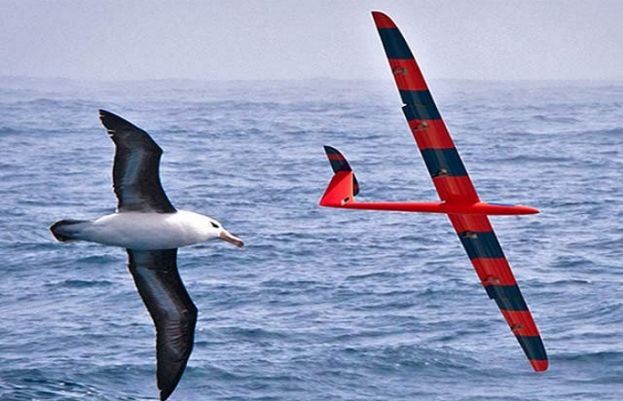
Scientists have created a self-flying glider that uses machine learning to navigate rising air currents, in an experiment that could help our understanding of how birds migrate.

Soaring birds ride warm air passages known as thermals to fly and gain height without needing to flap their wings, although no one knows exactly how they do it.

To gain insight into what cues birds instinctively use to catch an updraught, researchers from the University of California San Diego equipped a pilotless glider with an on-board computer allowing it to change direction on the basis of real-time measurements.

To help navigate the ever-changing environment, they used machine learning — the glider, which has a wingspan of two metres (six feet), in effect teaches itself how to fly by evaluating each variation in air currents and receiving a reward for every “correct” decision that resulted in increased altitude.

In a study published on Wednesday in the journal Nature, the team reported that after just 15 hours of test flights, the glider had “learned” how to optimise its position and developed a strategy to catch the warm updraughts. “We find it very impressive as the glider had no prior knowledge about atmospheric physics or aerodynamics,” said Massimo Vergassola, lead study author.

Whereas several other studies have shown how fast machines can learn strategies or form algorithms to solve complex problems, thermal updrafts change nearly constantly, making the gliders’ task extra taxing.


from Science & Technology - SUCH TV - SUCH TV https://ift.tt/2IcST3b

Friday, September 21, 2018

Japan fashion guru Maezawa lands first SpaceX moon flight

Japan fashion guru Maezawa lands first SpaceX moon flight

Japan fashion guru Maezawa lands first SpaceX moon flight
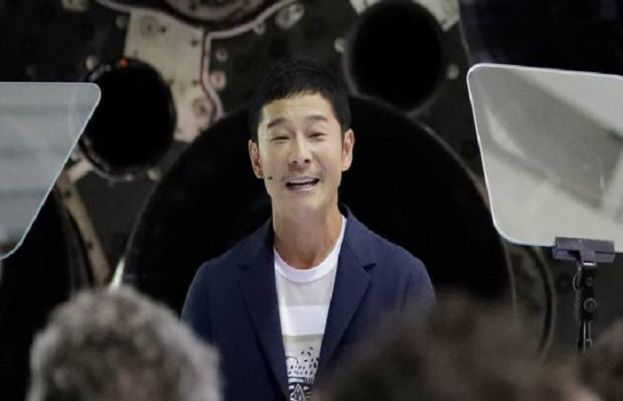
SpaceX, Elon Musk’s space transportation company, on Monday named its first private passenger on a voyage around the moon as Japanese billionaire Yusaku Maezawa, the founder and chief executive of online fashion retailer Zozo.

A former drummer in a punk band, Maezawa is tentatively planning to make his moon flight in 2023 aboard SpaceX’s forthcoming Big Falcon Rocket spaceship, taking the race to commercialize space travel to new heights.

Only 24 astronauts have flown beyond Earth’s protective magnetic shield, in missions spanning a four-year period from December 1968 to December 1972. Maezawa’s identity was revealed at an event on Monday evening at the company’s headquarters and rocket factory in the Los Angeles suburb of Hawthorne.

“He’s a very brave person to do this,” Musk said of the Japanese entrepreneur.

Most famous outside Japan for his record-breaking $110 million purchase of an untitled 1982 Jean-Michel Basquiat painting, Maezawa said he would invite six to eight artists to join him on the lunar flyby.

The billionaire chief executive of electric car maker Tesla Inc, Musk said the Big Falcon Rocket, or BFR, the super heavy-lift launch vehicle that he promises will shuttle passengers to the moon and eventually fly humans and cargo to Mars, could be conducting its first orbital flights in two to three years.

Musk has previously said he wants the rocket to be ready for an unpiloted trip to Mars in 2022, with a crewed flight in 2024, though his ambitious production targets have been known to slip.

“It’s not 100 percent certain we can bring this to flight,” Musk said of the lunar mission.

The amount Maezawa is paying for the trip was not disclosed, but he told Reuters the total sum was “much higher” than the cost of a Basquiat painting.

Musk said Maezawa had outlaid a significant deposit and would have a material impact on the cost of developing the BFR, which he estimated at about $5 billion.

RESTLESS BILLIONAIRE

The 42-year-old Maezawa is one of Japan’s most colorful executives and is a regular fixture in the country’s gossipy weeklies with his collection of foreign and Japanese art, fast cars and celebrity girlfriend.

Maezawa made his fortune by founding the wildly popular shopping site Zozotown. His company, Zozo, officially called Start Today Co Ltd, also offers a made-to-measure service using a polka dot bodysuit, the Zozosuit..

In a country known for its staid corporate culture, the businessman is one of a small group of mould-breaking billionaires widely recognized by the general public.

With SpaceX, Amazon.com founder Jeff Bezos’ Blue Origin and entrepreneur Richard Branson’s Virgin Galactic battling it out to launch private-sector spacecraft, Maezawa will join a growing list of celebrities and the ultra-rich who have secured seats on flights offered on the under-development vessels.

Those who have signed up to fly on Virgin Galactic sub-orbital missions include actor Leonardo DiCaprio and pop star Justin Bieber. A 90-minute flight costs $250,000.

Short sightseeing trips to space aboard Blue Origin’s New Shepard rocket are likely to cost around $200,000 to $300,000, at least to start, Reuters reported in July.

These trips were not attractive given the limited amount of time spent in zero-gravity, Maezawa told Reuters.

“If I’m going to go to space, I’d rather go as far as I can,” he said.

FLY ME TO THE MOON

Maezawa has already shown his penchant for fast machines, splashing out on vehicles including the Bugatti Chiron sports car and the Mercedes-Maybach G650 Landaulet SUV. And last month he tweeted that his new jet’s interior is being fashioned by luxury label Hermes.

While space flight is a more risky proposition - with Maezawa in his late 40s by 2023 - he said there are no training plans yet in place.

“SpaceX is going to be doing many, many test flights to ensure safety and we will wait for that to happen before we go,” Maezawa told Reuters.

A jaunt around the moon would provide welcome publicity for Zozo, which has ambitious overseas sales targets to be driven by its custom-made private clothing line. The company’s shares fell as much as 4.7 percent after the news but closed up 2 percent.

The diminutive Maezawa, who as a young man struggled to find clothes that fit, hopes to revolutionize the fashion industry through his Zozosuit, which, once donned, allows users to upload their body measurements and order a growing number of made-to-measure items.

SpaceX has already upended the space industry with its relatively low-cost reusable Falcon 9 rockets. The company has completed more than 50 successful Falcon launches and snagged billions of dollars’ worth of contracts, including deals with NASA and the U.S. Department of Defense.

When asked about Boeing Co CEO Dennis Muilenburg’s prediction that the first humans will be carried to Mars on a Boeing rocket, Musk responded, “Game on,” to the sound of cheers from employees assembled at the event.


from Science & Technology - SUCH TV - SUCH TV https://ift.tt/2MLdo7t
Machines will do more tasks than humans by 2025: WEF

Machines will do more tasks than humans by 2025: WEF

Robots
Robots will handle 52 percent of current work tasks by 2025, almost twice as many as now, a World Economic Forum (WEF) study said Monday.

The sharp increase could also see a net gain in "new roles" for humans, who will have to revamp skills to keep pace with the "seismic shift" in how we work with machines and computer programmes, the forum estimated.

"By 2025 more than half of all current workplace tasks will be performed by machines as opposed to 29 percent today," a statement by the Swiss non-profit organisation said.

Simultaneously, rapid changes in machines and algorithms, or computer processes that are designed to solve problems, "could create 133 million new roles in place of 75 million that will be displaced between now and 2022," the group forecast.

Based near Geneva, the WEF is known for the annual pow-wow of wealthy individuals, politicians and business leaders that it organises in Davos, Switzerland.

Its report, The Future of Jobs 2018, foresees robots swiftly replacing humans in the accounting, client management, industrial, postal and secretarial sectors.

Jobs that require "human skills" such as sales, marketing and customer service should see demand increase meanwhile, along with e-commerce and social media.

A major challenge will be to retrain workers, who will themselves be pressed to update skills especially in the areas of "creativity, critical thinking and persuasion", the study found.

It surveyed personnel directors and senior executives from a broad range of companies around the world that account for 70 percent of global output.

Between now and 2022, they believe the aviation, travel and tourism sectors in particular will have to retrain workers, and identified an overall trend towards lifelong learning and adaptation.

Governments were advised meanwhile to prepare safety nets for workers and communities threatened by what the WEF concluded would be "a significant shift" in the quality and permanency of the new jobs.


from Science & Technology - SUCH TV - SUCH TV https://ift.tt/2NXQjU1

Monday, September 17, 2018

The motorcycle that drives itself

The motorcycle that drives itself

The motorcycle that drives itself
As self-driving cars and trucks might get all the attention, BMW has unveiled its first autonomous motorbike, based on the best-selling BMW R1200 GS model.

In it, the driverless motorcycle starts its engine and then takes off down a track. It accelerates and makes turns all on its own before returning to a complete stop. The best part: the tech powering the motorcycle could one day keep bikers safer on the road.

 The driverless motorcycle independently drove off, accelerated, circled a winding test track and independently slowed down to a complete stop.

Despite the amazing feeling to see this artificial intelligence-powered bike driving around the racetrack, BMW said that it has no intention, at least in the near future, to sell a "completely independent motorbike," and that the underlying technology will be used as a platform to develop future systems and functions to make motorcycling safer and more comfortable.

"Motorcycles are intrinsically dangerous," said Marco Graziano, CEO of Visible Energy and a lifelong Ducati rider. "Safety is in the driver s skills, dedication, and the universal rules of chance."


from Science & Technology - SUCH TV - SUCH TV https://ift.tt/2NPybva

Saturday, September 15, 2018

Apple unveils new premium iPhone XS, health features for watch

Apple unveils new premium iPhone XS, health features for watch

iPhone XS
Apple on Wednesday unveiled updated versions of its priciest iPhones along with a new smartwatch that allows users to take their own electrocardiograms, as the US tech giant looks to boost its momentum in a sputtering market.

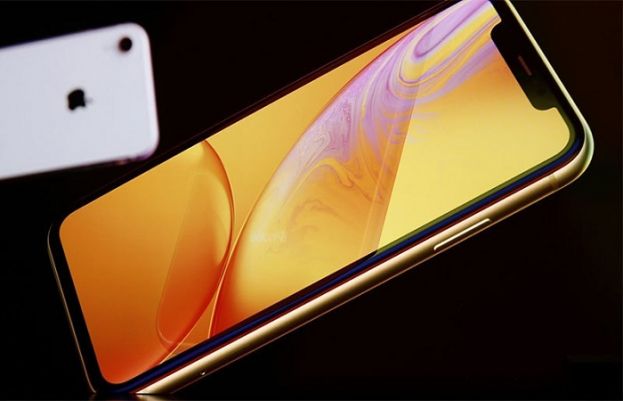
The California tech giant revealed its iPhone XS and iPhone XS Max, updating the top-of-the line handsets released a year earlier. The new devices are aimed at maintaining Apple's share in the premium segment.

“We are going to take iPhone X to the next level,” chief executive Tim Cook said at a media event at the company's headquarters in Cupertino, California.

The new phones have displays of 5.8 and 6.5 inches, boosting screen size while keeping a small-format handset, Apple vice president Phil Schiller said.

The September event allows the company to unveil its latest offerings before the key holiday shopping season.

While the iPhone has made Apple the world's most valuable company, worth more than $1 trillion, it has slipped to third place among smartphone makers as Chinese-based Huawei has grabbed the number two spot.

Analyst Patrick Moorhead of Moor Insights & Strategy said Apple had done enough “to keep its smartphone growth going until the competition responds.”

New smartwatch features

Apple also introduced a fourth generation of Apple Watch with a major redesign -- and a series of features designed to improve its performance as a medical and health device.

The watch, sold in the United States from $399 and up, will be available in stores on September 21.

“Apple Watch has become an intelligent guardian for your health,” chief operating officer Jeff Williams said.

He highlighted a major innovation -- the watch's ability to perform an electrocardiogram.

“This is the first ECG product offered over the counter directly to consumers,” he said. “Now you can take an ECG any time, anywhere, right from the wrist.”

The device also detects when a person suffers a fall, seen as an important feature for elderly or disabled users.

“Identifying a fall may sound like a straightforward problem, but it requires a lot of data analysis,” Williams said.

If a person falls, and then is motionless, the watch will call emergency services, he added.

'Crossroads'

Research firm CB Insights said Apple is at a “crossroads” a decade after introducing the iPhone. “Looking for the next wave, Apple is clearly expanding into augmented reality and wearables with the Apple Watch and AirPods wireless headphones,” the firm said.

“But the next 'big one' -- a success and growth driver on the scale of the iPhone -- has not yet been determined. Will it be augmented reality, auto, wearables? Or something else entirely?”

Apple's event comes with the global smartphone market largely saturated, without a major catalyst for sales ahead of a likely rollout of 5G, or fifth generation, wireless networks, expected in 2019.

Research firm IDC expects worldwide smartphone shipments to decline 0.7 percent in 2018 to 1.455 billion units, with growth likely to resume as 5G devices become available.

Cook said Apple was nearing its two billionth device for its mobile operating system known as iOS.

“We are about to hit a major milestone. We are about to ship our two billionth iOS device,” he said. “This is astonishing -- iOS has changed the way we live. “


from Science & Technology - SUCH TV - SUCH TV https://ift.tt/2MqzWKO